





Be honest — how many of us reach for our phones first thing in the morning? Or scroll while waiting in line? Or sneak in “just one more video” before bed?
Now imagine growing up in a world like this.
Screens are woven into everyday life. While technology can educate and entertain, it also introduces one of today’s biggest parenting challenges: setting limits without daily conflict.
This is where gentle parenting becomes especially powerful — not as a trend, but as a practical approach to raising emotionally secure children in a digital age.
What Gentle Parenting Really Means
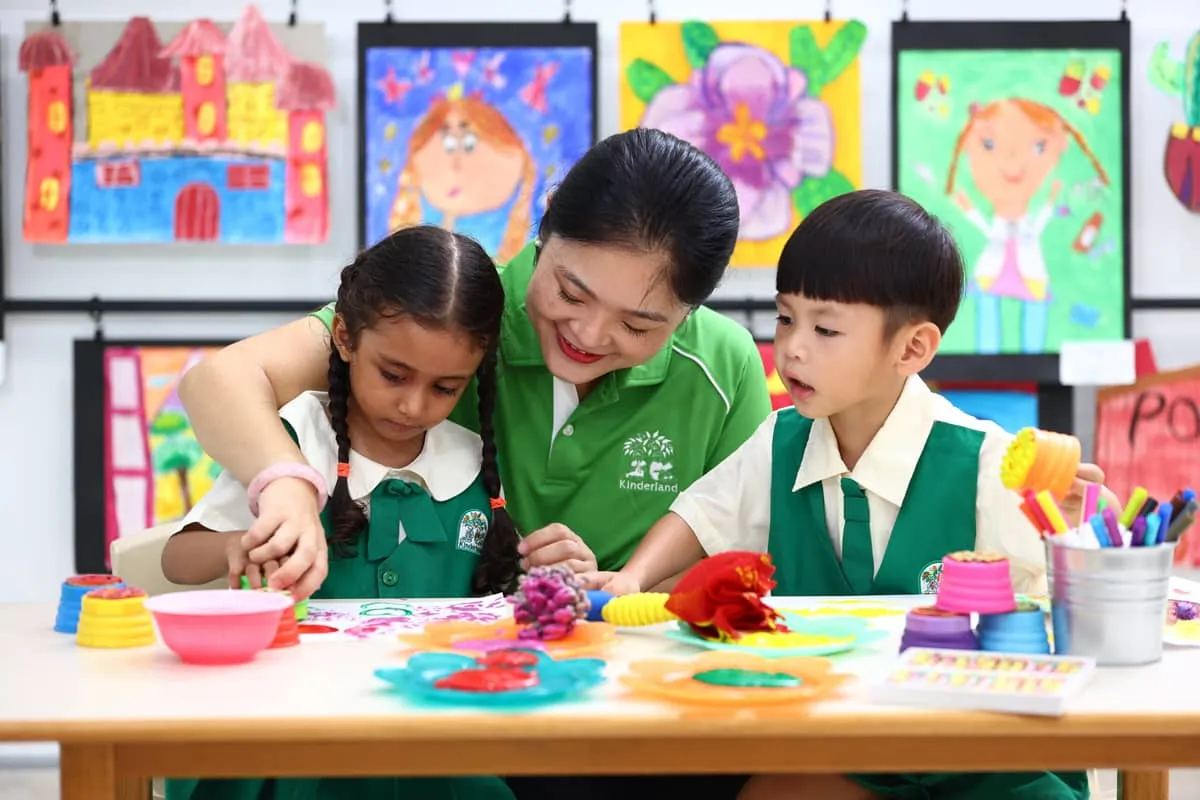
Connect, create, and have fun—bond with your children through the joy of art
Gentle parenting is often mistaken for permissiveness. In reality, it combines warm connection with firm, consistent boundaries.
Children are often corrected and guided.
Rules still exist.
Limits are still upheld.
The difference lies in how parents guide behaviour.
Instead of reacting with punishment or frustration, gentle parenting focuses on teaching children how to manage emotions, not simply control behaviour. When children feel understood, they become more open to cooperation and learning self-regulation over time.
Why Screen Time Deserves Our Attention

Get moving with your children—sports and dance are perfect for screen-free bonding, much celebrated at Kinderland
As digital exposure increases, concerns around sleep disruption, reduced physical activity, attention challenges, and emotional regulation have grown.
In Singapore, the Ministry of Health provides age-appropriate screen time recommendations to support healthy development — not to eliminate technology, but to encourage balance.
MOH Screen Time Guidelines for a parent
| Age Group | Recommended Screen Time |
|---|---|
| Below 18 months | Avoid screen use, except for video calls |
| 18 months – 6 years | Less than one hour/ day of supervised, high-quality programming |
| School-aged children | Consistent limits to ensure sleep, physical activity, and family interaction are not compromised |
For young children, this may look like setting simple and predictable limits, such as:
- allowing screen use only after school routines or outdoor play,
- limiting viewing to one or two short programmes a day,
- keeping devices away during meals and at least one hour before bedtime,
- or designating certain spaces, such as bedrooms, as screen-free zones.
Understanding why limits matter helps parents enforce them calmly and consistently, turning boundaries into supportive routines rather than daily struggle
Small Changes That Make a Big Difference

Let the sun be their playground! Outdoor fun keeps little minds active, happy, and away from screens
Adults should be mindful of keeping screens running in the background. Even when children are not actively watching, background television or videos can distract them and compete for their attention.
Research shows background media can:
- Reduce parent–child conversation
- Interrupt focused play
- Affect early language development
Young children learn best through interaction — eye contact, conversation, and shared experiences. Turning off unused screens often creates a calmer environment that naturally supports connection and learning.
Start With Mealtimes

Share stories, laughs, and chats with your children during mealtimes
For many families, mealtimes are the most realistic place to begin building healthier screen habits.
Rather than presenting meals as strict “no-screen rules,” gentle parenting frames them as predictable moments of connection. Children cope better when expectations are known in advance.
Try anchoring routines by:
- Giving advance reminders
“After this video ends, we will get ready for dinner.” - Keeping timing consistent daily
- Involving children in simple tasks like setting utensils or serving food
When routines feel predictable, resistance often decreases.
When Screens Are Taken Away — and Emotions Take Over

Swap screens for beats! Music sparks creativity, calms the mind, and gives children a joyful break from devices
Almost every parent knows this moment.The device switches off — and suddenly tears, shouting, or anger appear. These reactions are not manipulation or defiance. Digital content provides fast stimulation and instant rewards. When screens stop abruptly, a child’s brain experiences a difficult transition — and young children simply lack the skills to regulate that disappointment independently.
The meltdown is often a skills gap, not a behaviour problem.
Gentle Parenting in Action: What To Do During a Meltdown

This is where gentle parenting becomes practical.
- Prepare Before the Transition
Prevention is more effective than reaction.
- Give a 5-minute alert before the change of course
- Use countdowns or visual timers
- Agree on limits beforehand
“One episode today, then tablet rests.”
Predictability helps children feel safe.
- If a Meltdown still happens – Regulate first
Even with preparation, strong emotions may surface. When that happens, shift your focus from correcting behaviour to supporting regulation.
Children borrow emotional control from adults.
Instead of reasoning immediately:
- Lower your voice
- Stay physically nearby
- Avoid lectures during peak emotion
A calm adult nervous system helps calm a child’s nervous system. Children often mirror the emotional tone around them.
- Acknowledge Feelings — Without Changing the Boundary
Empathy does not mean giving in. It means connecting with your child’s big emotions and letting them know you will handle the situation together. It also reminds parents not to take their child’s reaction personally — strong feelings are part of development.
Example:
“I know you are upset. You really wanted to keep playing. It is hard to stop when you are having fun.”
Then restate calmly:
“Screen time is finished. I am here with you.”
Children learn that feelings are accepted — but limits remain.
- Offer a Transition, Not a Replacement Screen
Young children struggle when activity stops abruptly. Help soothe them into the next phase with simple, age-appropriate activities.
You might:
- Invite them to help set the table
- Offer drawing or building play
- Suggest movement: stretching, jumping, or music
The goal is transition, not distraction or replacing one screen with another.
- Co-Regulate Until Calm Returns
If crying continues:
- Sit beside them
- Offer a hug if welcomed
- Breathe slowly together
Teaching emotional recovery is more valuable than stopping tears quickly.
- Teach After the Storm
Problem-solving works best once calm returns.
Later, gently discuss:
- What happened that caused such a big emotion outbreak?
- What they felt and how could they have cope better?
- What can help in future, taking this opportunity for correction of device usage.
This builds lifelong emotional regulation skills.
Creating Screen Habits That Last

Reading is a wonderful way for children to enjoy quality self-entertainment
Healthy habits grow through small, consistent practices:
- Creating screen-free zones (bedrooms and dining tables)
- Establishing predictable daily routines
- Modelling balanced device use
- Purposeful use of digital device, discussing content together when possible
Equally important is offering meaningful alternatives:
- Books during waiting times
- Simple card or travel games
- Outdoor exploration
- Creative play and music listening
These help children rely less on screens when connection and engagement are readily available.
Growing Calm, Confident Children in a Digital World

Screens will always be part of modern childhood. Yet, with calm guidance and strong connections, parents can ensure that technology never replaces meaningful relationships. Gentle parenting in the digital age is not about eliminating screens or expecting perfect behaviour—it is about nurturing trust, balance, and understanding.
With empathy, clear boundaries, and consistent routines, families can raise children who are not only digitally capable, but also emotionally resilient.
At centres such as Kinderland Preschool, educators observe daily that children thrive when guidance combines warmth with structure — the same balance that supports healthy screen habits at home.
This article is contributed by:
Ms Michelle Ang
Senior Centre Leader
Kinderland Preschool @ Ministry of Manpower



 Kinderland Singapore