




When a recent Channel NewsAsia report (15 April 2026) highlighted stricter measures for school bullying—including suspension, detention, and even caning for serious cases—it gave many parents pause.
“This is serious.”
And it is.
But beyond the headlines, this moment invites a deeper reflection—not just on how bullying is managed, but on how it begins, and more importantly, how it can be prevented. If strong discipline is needed later, are we doing enough in the early years?
It Often Starts Earlier Than We Think
At Kinderland, we advocate that learning does not begin with academics—it begins with character, relationships, emotions, and social understanding.
“Bullying” can occur even in preschool. Young children are still learning how to manage their emotions, communicate their needs, and build friendships. Sometimes, their actions may unintentionally hurt others. However, when hurtful behaviour becomes repeated or targeted, and uncorrected, it should be taken seriously.
Parents and educators play a shared role in recognising early signs and supporting children through these experiences.
What Is Bullying?
The Ministry of Education (MOE) describes hurtful behaviour as ranging from one-off insensitive remarks to repeated, intentional actions that cause distress. These behaviours can be verbal, social, or physical.
When such actions are deliberate and persistently directed at the same child, they are considered bullying.
In preschool settings, these behaviours often stem from developing social and communication skills. As Minister for Education Mr Desmond Lee noted, children are still learning what is right and wrong and how to interact with others.
Why Early Intervention Matters
Bullying at a young age can affect how safe and confident a child feels. It may impact their friendships, emotional well-being, and even their interest in learning.
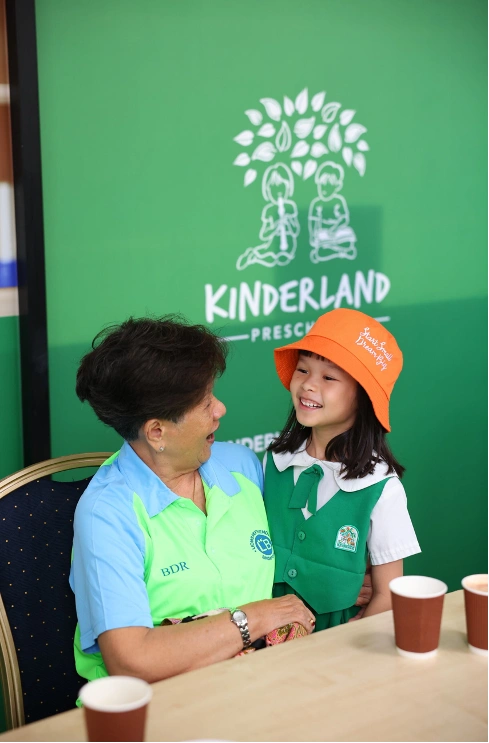
At Kinderland, we create meaningful opportunities for children to engage with seniors—fostering interaction, connection, and the development of empathy.
Research shows that strong social-emotional skills are linked to better mental health and academic outcomes later in life. Addressing these behaviours early also supports MOE’s goal of creating safe, caring school environments through strong school-home partnerships.
Prevention starts with everyday interactions—both at home and in school.
How Can Parents Help Prevent Bullying?
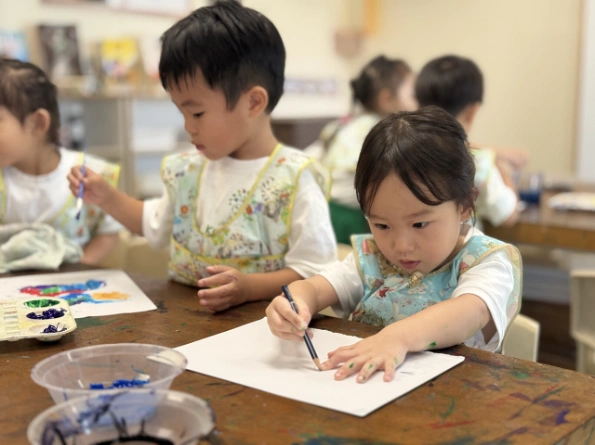
Art not only encourages creativity but also helps children express their emotions.
1. Build your child’s social-emotional foundation
Pre-schoolers need help learning to name their feelings, empathise with others, and communicate calmly. These are skills highlighted in the Nurturing Early Learners (NEL) Framework.
At Kinderland, these skills are intentionally nurtured through guided interactions, play-based learning, and daily classroom experiences.
You can reinforce this at home by:
Naming emotions and addressing it directly: “You look upset. Want to tell me what happened?”
Coaching problem-solving: “Let’s think of another way to ask for a turn.”
Modelling respectful speech
2. Reinforce family values
Values like respect, kindness, and responsibility start at home. Talk about them often and show what they look like in daily situations.
3. Encourage kindness and understanding
Use stories and simple examples to help children understand how their actions affect others.
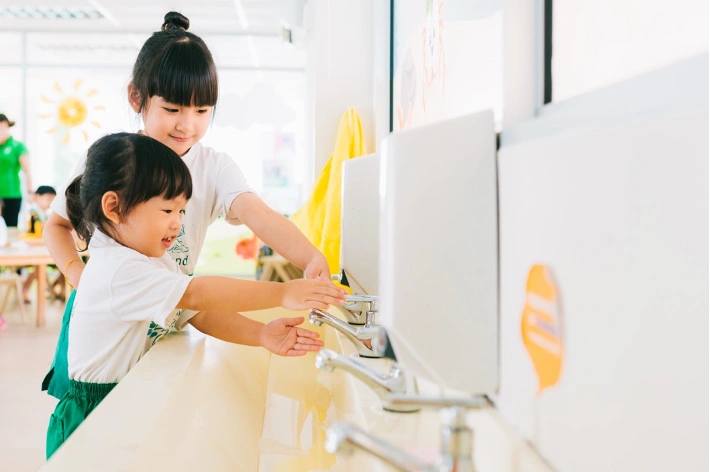
At Kinderland, character development is seamlessly woven into our curriculum and brought to life through fun, engaging experiences—whether through storytelling, pretend play, or everyday activities.
Signs Your Child May Be Experiencing Bullying — and What to Do
Preschoolers may not always have the words to express what they are going through. Look out for:
- Reluctance to go to school or increased clinginess
- Unexplained injuries or damaged belongings
- Withdrawal from friends or activities
- Mood changes (anxiety, irritability, tantrums, sleep issues)
- Regression (e.g. bedwetting, baby talk)
- Sudden drop in confidence or interest in learning
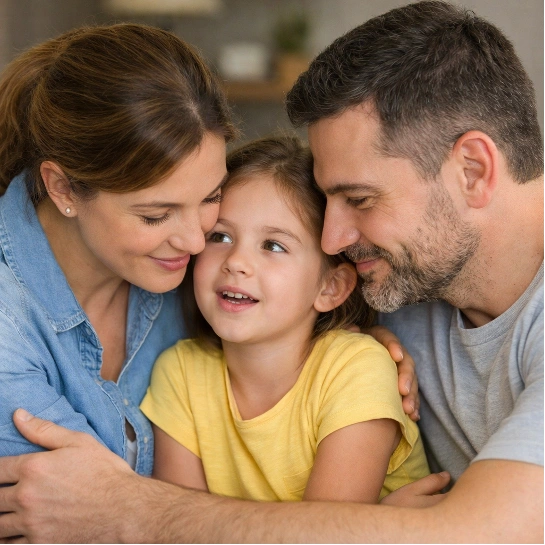
Give your child a warm hug and truly listen—they need your comfort as much as your attention.
If you notice these signs:
- Stay calm and listen
Create a safe space for your child to share. - Validate their feelings
“That sounds really upsetting.” - Gather details gently
Ask simple questions like:
- “Who was there?”
- “What happened next?”
- “Where did it happen?”
- Document what you observe
Keep note of patterns, dates, or changes in behaviour. - Talk to the preschool
At Kinderland, educators follow structured, child-centred approaches to guide behaviour, support all children involved, and work closely with parents to ensure consistent care.
What If Your Child Is the One Hurting Others?
It can be difficult to hear, but it is also an opportunity to guide your child’s growth.
- Stay calm and avoid reacting harshly
- Help your child understand how their actions affect others
- Teach alternative behaviours (e.g. using words rather than physical action, taking turns rather than snatching)
- Reinforce empathy and responsibility
- Work closely with educators for consistent support
At Kinderland, we focus on guiding behaviour through understanding, helping children learn appropriate ways to express themselves and interact with others.
Talking to Your Child About Bullying
Simple, open-ended conversations work best:
- “Tell me about your day. What made you happy? What made you sad?”
- “That sounds scary/frustrating.”
- “If someone hurts you, who can you tell?”
These conversations build trust, self-awareness, and confidence.
| ✅ What to Say | ❌ What to Avoid |
|---|---|
| “Thank you for telling me.” | “Just ignore it.” |
| “I’m here to help.” | “You must have done something.” |
| “We’ll figure this out together.” | “You’re overreacting.” |
Note: Negative comments may discourage children from speaking up again. Parents can use C.H.E.E.R. in MOE website to help guide conversations with your child.
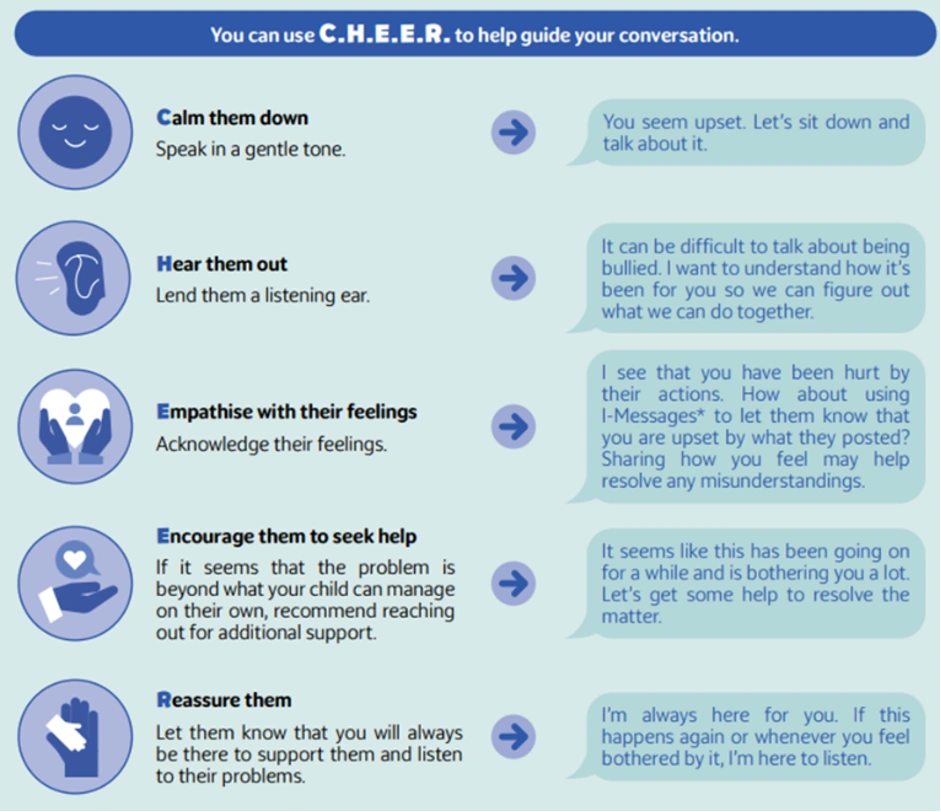
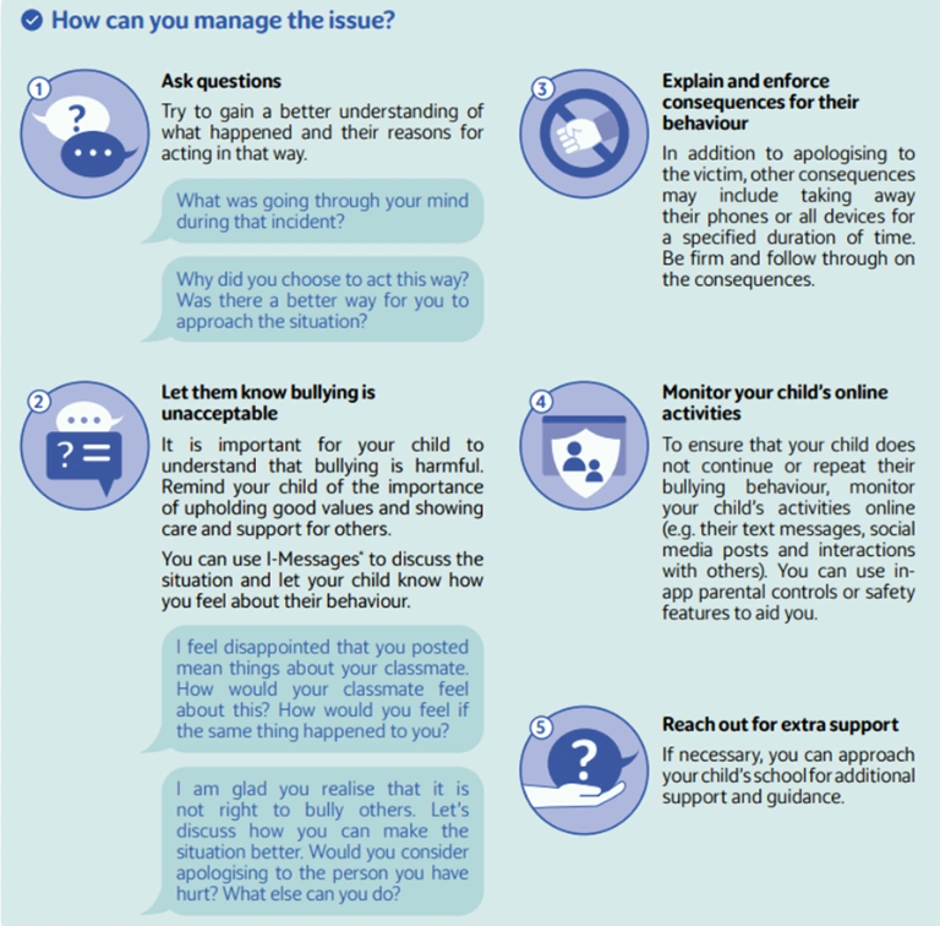
If your child has bullied someone, parents can gently guide them to understand what happened, encourage a heartfelt apology, and support them in rebuilding the relationship with care.
Helping Children Cope

Taking a deep breath helps little ones calm their minds and manage big emotions
Teach simple, practical strategies to help your child cope when they feel uneasy in any situation:
- Say firmly: “Stop. I don’t like that.”
- Walk away and seek an adult’s help
- Stay with kind friends
- Practise calming techniques (deep breathing, counting)
- Tell a trusted adult immediately
These are strategies children also practise in class, helping them build confidence to use them independently.
Partnering actively with the Preschool
Staying involved helps reinforce what children learn in school. Consistency between home and school makes a meaningful difference.
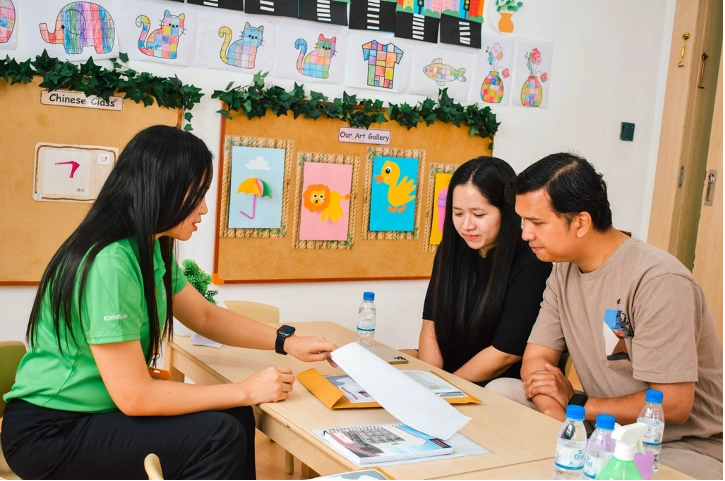
Do not hesitate to reach out to your centre leaders or educators. At Kinderland, we believe in a close partnership with parents to support the well-being of every child.
- Request a meeting with educators or centre leaders
- Share observations calmly and factually
- Ask about safety measures and next steps
- Agree on how updates will be communicated
- Work together on timely intervention and restorative practices
A strong partnership ensures children receive consistent guidance and support.
Final Thoughts
Preschoolers are still learning how to navigate friendships and emotions. However, patterns of bullying deserve early attention.
By recognising the signs, responding calmly, teaching empathy and communication, and working closely with educators, parents can help their children feel safe, supported, and ready to learn and grow.
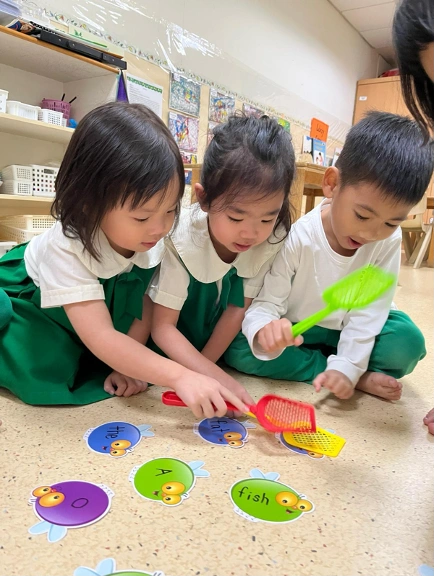
At Kinderland, group activities nurture teamwork, helping children learn to collaborate and resolve conflicts together.
At Kinderland, we believe every child deserves to feel understood, respected, and confident. Together, as partners in their development, we can nurture not just academic readiness, but the social and emotional foundations that last a lifetime.
This article is contributed by:
Ms Amy Lim
Kinderland Child Safety Management Manager
References
Standardising Bullying Incidents Management and Implementation | MOE. (2025). Moe.gov.sg. https://www.moe.gov.sg/news/parliamentary-replies/20251014-standardising-bullying-incidents-managem…
Martorell, G., Papalia, D. E., & Ruth Duskin Feldman. (2014). A child’s world: infancy through adolescence. McGraw-Hill Education, Cop.
CNA/er(rj). (2025, August 27). Schools to get stronger anti-bullying policies, review of discipline framework: Desmond Lee [Review of Schools to get stronger anti-bullying policies, review of discipline framework: Desmond Lee]. https://www.channelnewsasia.com/singapore/bullying-schools-discipline-moe-desmond-lee-5317211
NIEC (2025, July 20). Social Emotional Development in Pre-schoolers: From Disruptions to Development | National Institute of Early Childhood Development. National Institute of Early Childhood Development. https://niec.edu.sg/resources/article/classroom-management-social-emotional-development-preschool/
“This is not a simple issue”: Minister Desmond Lee on tackling bullying and developing solutions. (2025, August 27). AsiaOne. https://www.asiaone.com/singapore/not-simple-issue-minister-desmond-lee-tackling-bullying-and-devel…
About Values, Social and Emotional Competencies and Learning Dispositions. (2025). MOE – Nurturing Early Learners Portal. https://nel.moe.edu.sg/vsld/overview/
Chan, G. (2025, September 23). MOE will consider all suggestions on bullying seriously in ongoing review of issue: Desmond Lee. The Straits Times. https://www.straitstimes.com/singapore/politics/moe-will-consider-all-suggestions-on-bullying-serio…
MOE (2025). How do MOE and schools manage bullying and hurtful behaviours? Moe.gov.sg; MOE. https://www.moe.gov.sg/news/edtalks/how-do-moe-and-schools-manage-bullying-and-hurtful-behaviours
https://www.channelnewsasia.com/watch/stricter-school-disciplinary-measures-target-rising-bullying-cases-6058821


 Kinderland Singapore