




As parents and caregivers, we are often reminded of the importance of keeping children well hydrated—especially in Asia’s warm climate. While water is essential for good health, too much can also be very harmful, particularly for infants and young children. Understanding why this happens can help caregivers make safer choices.
Why Can Too Much Water Be Harmful?
Overhydration, sometimes referred to as water intoxication, occurs when a child consumes more fluid than their body can safely process. This can dilute sodium levels in the bloodstream, leading to a condition known as hyponatremia.
Sodium plays a crucial role in regulating fluid balance and supporting normal brain function. When sodium levels drop too low, it may result in serious complications such as brain swelling, seizures, and in rare cases, coma.
This risk is even greater in younger infants.
Special Care for Infants (0–6 Months)

At Kinderland, we care for your baby like our own—so you can smile with peace of mind
Infants under six months are especially vulnerable, as their developing kidneys are not able to handle excess water effectively.
During this stage, breast milk or infant formula provides all the hydration and nutrition a baby needs. Giving additional water is unnecessary and may disrupt the baby’s delicate electrolyte balance. Parents are advised to avoid introducing water unless recommended by a healthcare professional.
Despite these precautions, it is still important to recognise early warning signs of overhydration.
Recognising the Signs of Overhydration
Young children may not always be able to express discomfort clearly. It is important for caregivers to be aware of the following signs:
- Unusual drowsiness or lethargy
- Irritability
- Nausea or vomiting
- Swelling of the face, hands, or feet
- Seizures (in severe cases)
If any of these symptoms are observed, seek medical attention promptly.
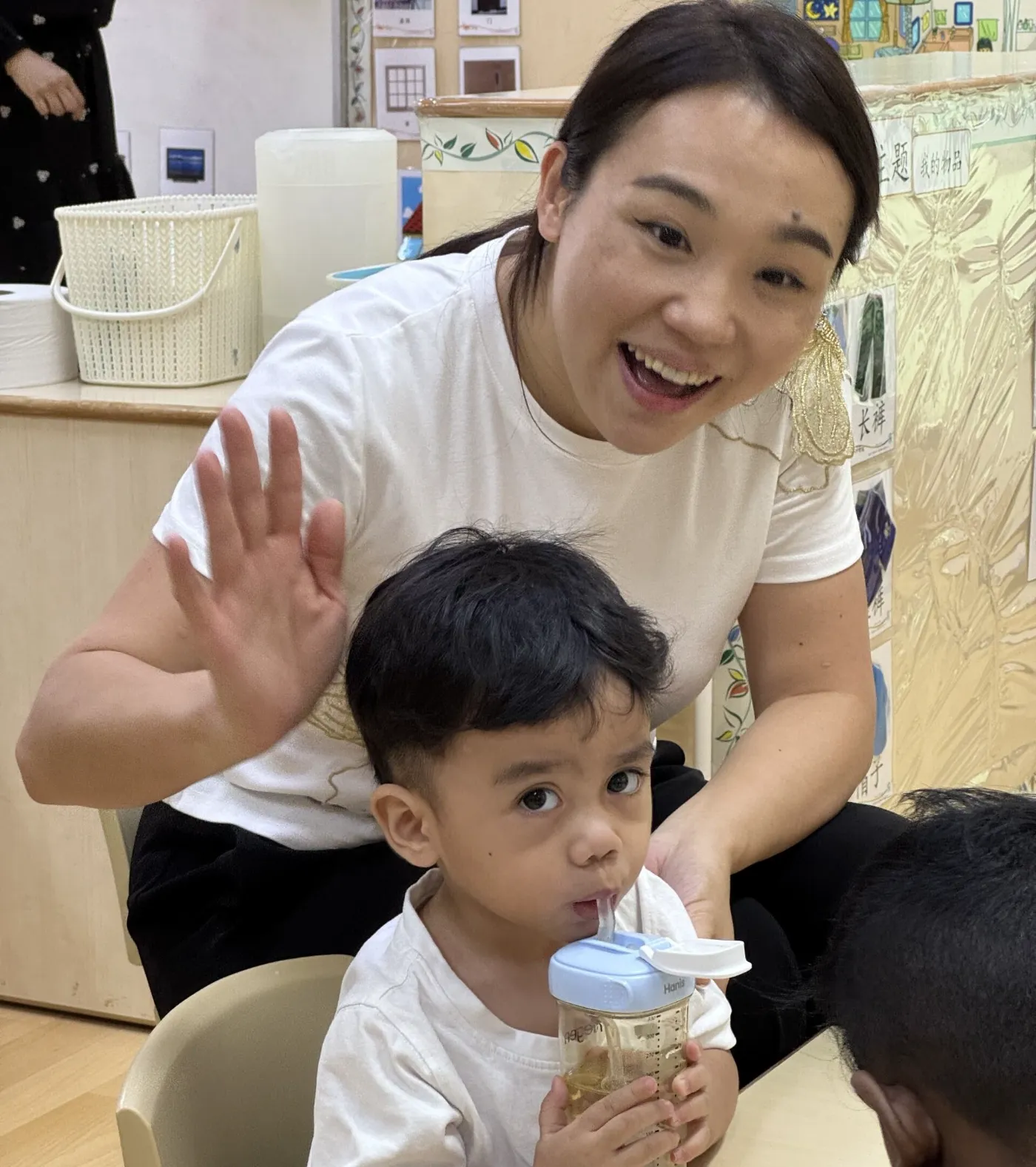
Building healthy hydration habits together with our educator.
In addition to recognising symptoms, following age-appropriate hydration guidelines is essential.
Hydration Recommendations by Age
| Age Group | Hydration Recommendation | Total Water per Day (L/d)* |
|---|---|---|
| 0–6 months | Breast milk or formula only. No additional water is required. | 0.7 L |
| 6–12 months | Small sips of water can be introduced during mealtimes; breast milk/formula remains primary. | 0.8 L |
| 1–6 years | Offer water regularly throughout the day. Encourage drinking based on thirst and avoid excessive intake. | 1.3 – 1.7 L |
Total Water* Dietary Reference Intakes (DRIs) by World Health Organisation (WHO): – Dietary Reference Intakes for Calcium and Vitamin D – NCBI Bookshelf
*Total water includes all water contained in food, beverages, and drinking water.
- Beyond general recommendations, daily habits also play an important role in maintaining healthy hydration.
Supporting Healthy Hydration Habits

Fruits rich in water and electrolytes are excellent for hydration while supporting a balanced diet.
Caregivers can support safe hydration through simple daily practices:
- Follow your child’s thirst cues rather than encouraging constant drinking
- Use appropriately sized cups to manage portions
- Include water-rich foods such as watermelon, strawberries, pear, papaya and oranges in your child’s diet
- Prepare infant formula correctly, following recommended instructions
- Exercise caution during illness—consult a doctor before increasing fluid intake or giving electrolyte solutions
- Ensure consistency among caregivers in following safe hydration practices
A Gentle Reminder for Parents

At Kinderland, we care for every child with love, ensuring their health and well-being are always in balance
Ultimately, maintaining balance is key. Children are generally able to regulate their own fluid needs when given the opportunity. By being mindful of both under- and overhydration, parents can support their child’s overall health and well-being.
If you have any concerns about your child’s hydration, please consult a paediatrician for personalised advice.
This article is contributed by:
Ms. Zolynne Tan
Head of Food, Nutrition and Hygiene
References
HealthHub. (n.d.). The beginner’s guide to taking care of your baby (0–6 months). Retrieved from https://www.healthhub.sg/well-being-and-lifestyle/pregnancy-and-infant-health/the-beginners-guide-to-taking-care-of-your-baby-0-6-months
Sankar, M. J., et al. (2019). Water intoxication in infants: A review. Journal of Pediatric Health Care, 33(4), 456–462. https://www.ncbi.nlm.nih.gov/pmc/articles/PMC6682940/
Dietary Reference Intakes (DRIs): Recommended Dietary Allowances and Adequate Intakes, Total Water and Macronutrients, A Catharine Ross, Taylor, C. L., Yaktine, A. L., & Del, H. B. (2011). – Dietary Reference Intakes for Calcium and Vitamin D – NCBI Bookshelf. Nih.gov; National Academies Press (US). https://www.ncbi.nlm.nih.gov/books/NBK56068/table/summarytables.t4/?report=objectonly


 Kinderland Singapore