



Every parent hopes to give their child the best possible start in life. One powerful advantage begins much earlier than many parents realise — through a young child’s natural ability to learn language.
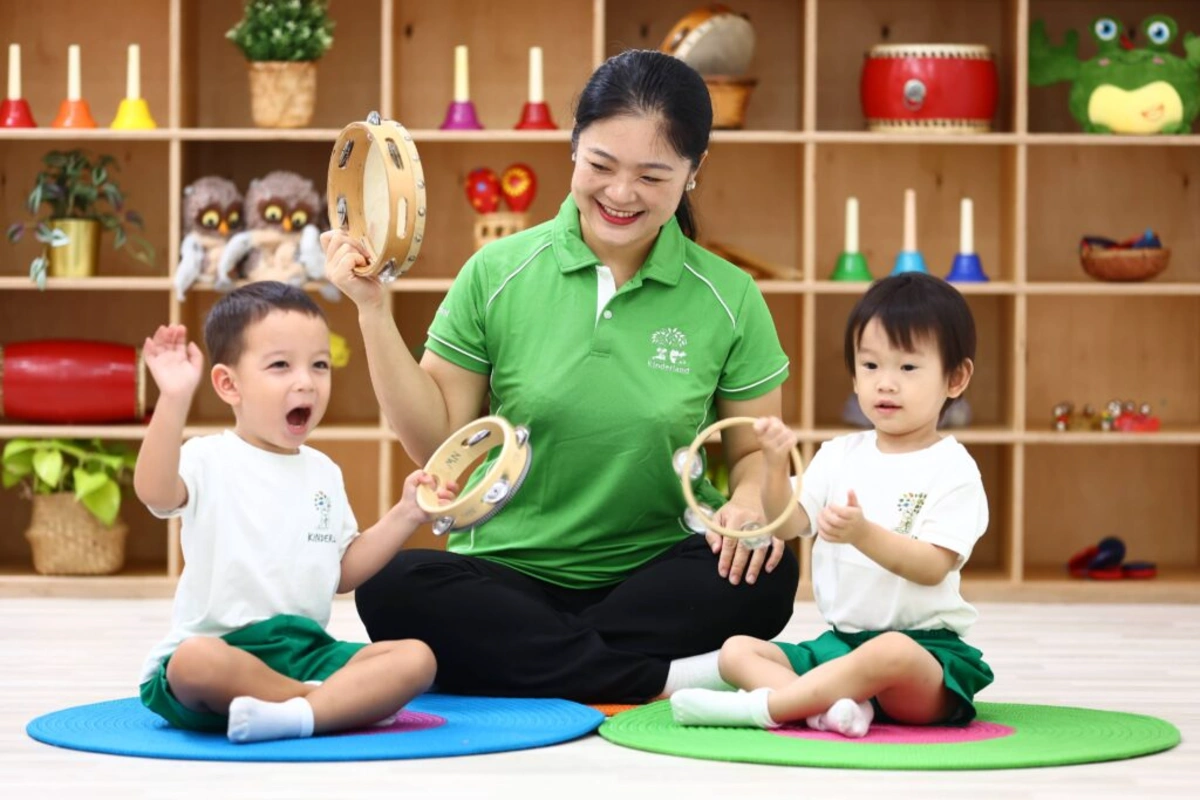
Children learning songs in different languages through music and play.
Imagine a toddler happily singing an English song during playtime, then responding in Mandarin or Japanese during storytelling. What may seem effortless is actually the brain working at one of its most adaptable stages.
During the first six years of life, children experience rapid brain development. Experts often describe this as a “golden window” for language learning. At this stage, children naturally absorb sounds, words, and sentence patterns through play, conversation, and everyday interactions.
Many parents worry that learning two languages might confuse their child. In fact, research shows the opposite. When children are exposed to two languages early, they can develop strong abilities in both.
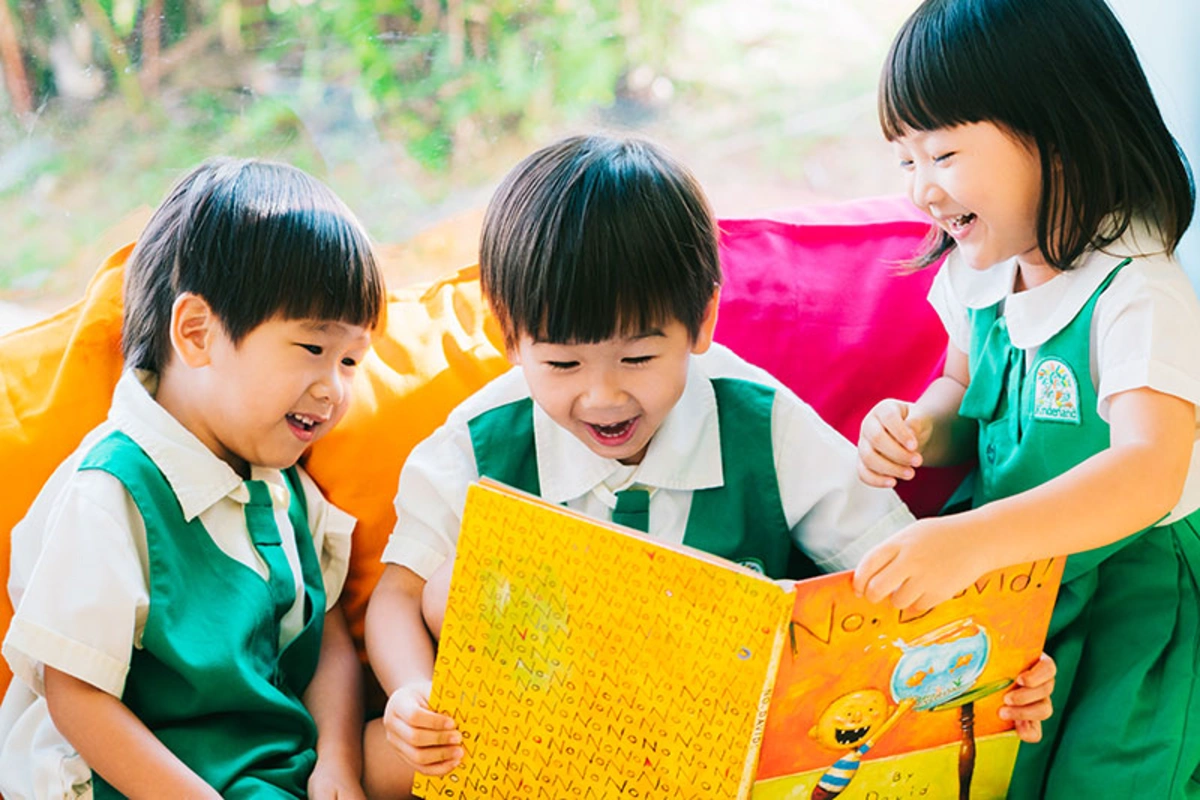
Shared reading moments help children build vocabulary, confidence, and a love for language.
At Kinderland Preschools, bilingual learning happens naturally throughout the day. English and Chinese are woven into play, music, storytelling, classroom routines, and social interactions. At Kinderland Preschool @ Marine Parade and Pandan Valley, children may also explore Japanese as a third language in a fun and supportive environment.
Building Strong “Brain Management Skills”
Learning two languages does more than expand vocabulary. It also strengthens children’s “brain management skills” — the ability to focus, remember information, and adapt to new situations.
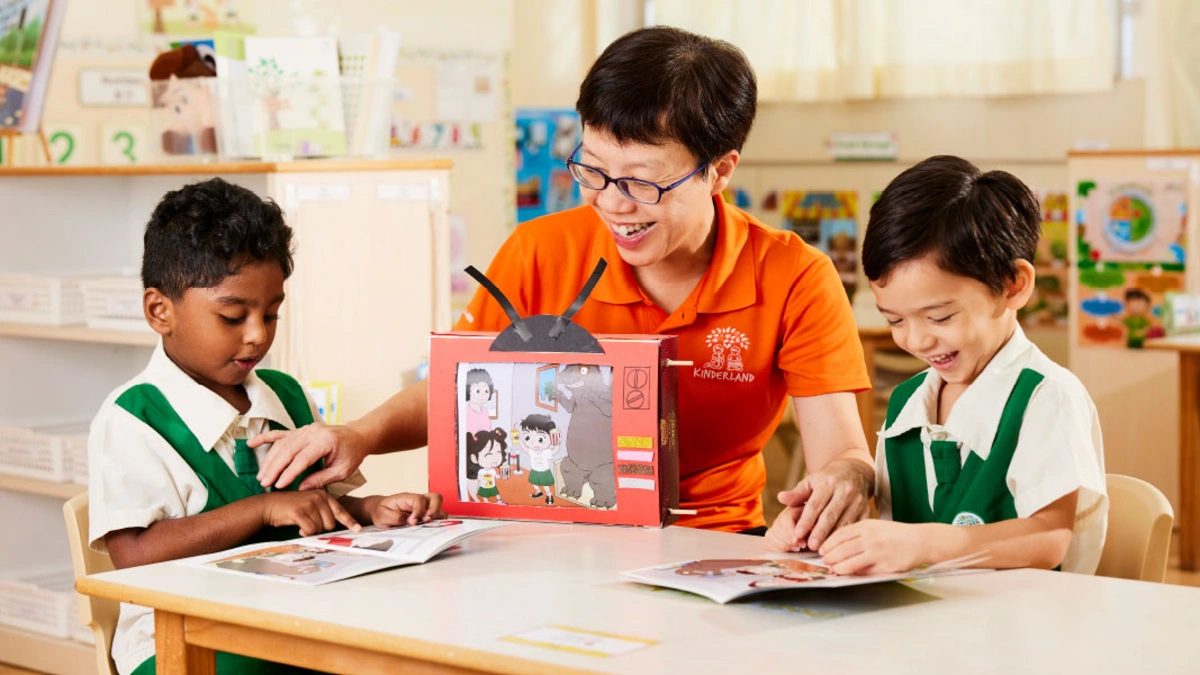
Our educator employs creative learning methods to teach children who are unfamiliar with Mandarin
Research shows that bilingual children often practise important executive functioning skills when they manage two language systems.
For example, when children switch between languages, follow instructions, or adjust how they communicate with friends, they practise skills such as:
- Focusing attention and managing distractions
- Remembering and applying information
- Switching between tasks or ideas
At Kinderland Preschools, educators nurture these abilities through guided conversations, collaborative play, and small-group activities. Children develop the confidence to express their ideas and communicate effectively with their peers in both languages.
How Music Supports Language Learning
Language learning begins long before children say their first words. Listening, rhythm, movement, and sound exploration all play important roles — especially for bilingual learners.
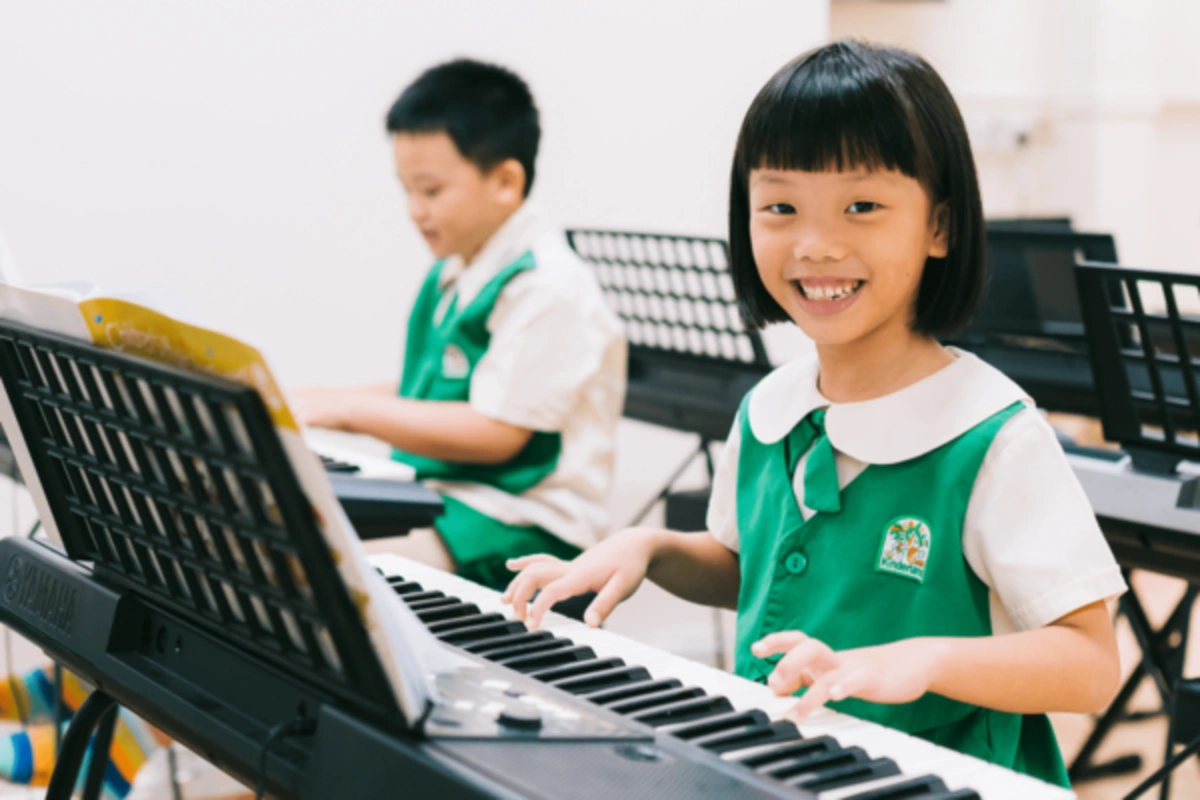
Music activities help children recognise sounds, develop pronunciation, and enjoy learning language
Research shows that music and language share similar brain systems for processing sound, rhythm, and auditory patterns. Through singing, musical play, and movement, children become more sensitive to speech sounds and language patterns.
This is particularly helpful when learning languages such as Chinese, where tones and pronunciation are important for meaning.
Music and rhythm activities also support phonological awareness — an important foundation for early literacy development.
At Kinderland Preschools, our music-infused curriculum integrates singing, movement, and musical instruments into daily learning experiences. These activities help children strengthen their listening skills, pronunciation, vocabulary, and confidence in both languages.
Learning Language Through Meaningful Experiences
Children learn language best when it feels natural and meaningful.
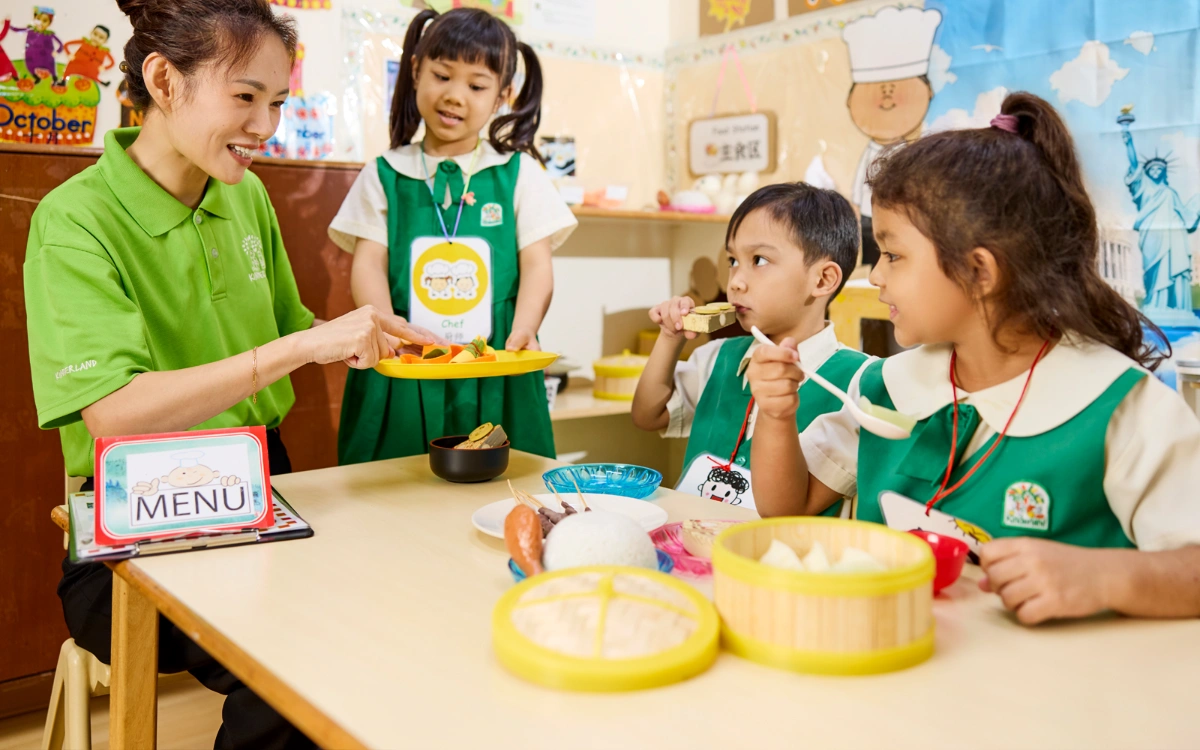
Pretend play helps children practise language naturally as they communicate, imagine, and create stories together
In the classroom, language learning takes place through play, storytelling, music, role-play, and everyday conversations. Children are encouraged to express their thoughts, ask questions, and communicate with teachers and friends.
Even simple daily routines become valuable learning opportunities. During snack time, transitions, or handwashing, children practise language naturally — asking for help, describing what they are doing, and following instructions.
A supportive environment allows children to feel safe to try, experiment, and express themselves without fear of making mistakes. Visual supports, gestures, and real-life materials help children build language skills step by step at their own pace.
A Progressive Bilingual Journey from Preschool to Kindergarten at Kinderland
As children grow at Kinderland Preschools, their bilingual abilities develop gradually alongside their confidence and communication skills.
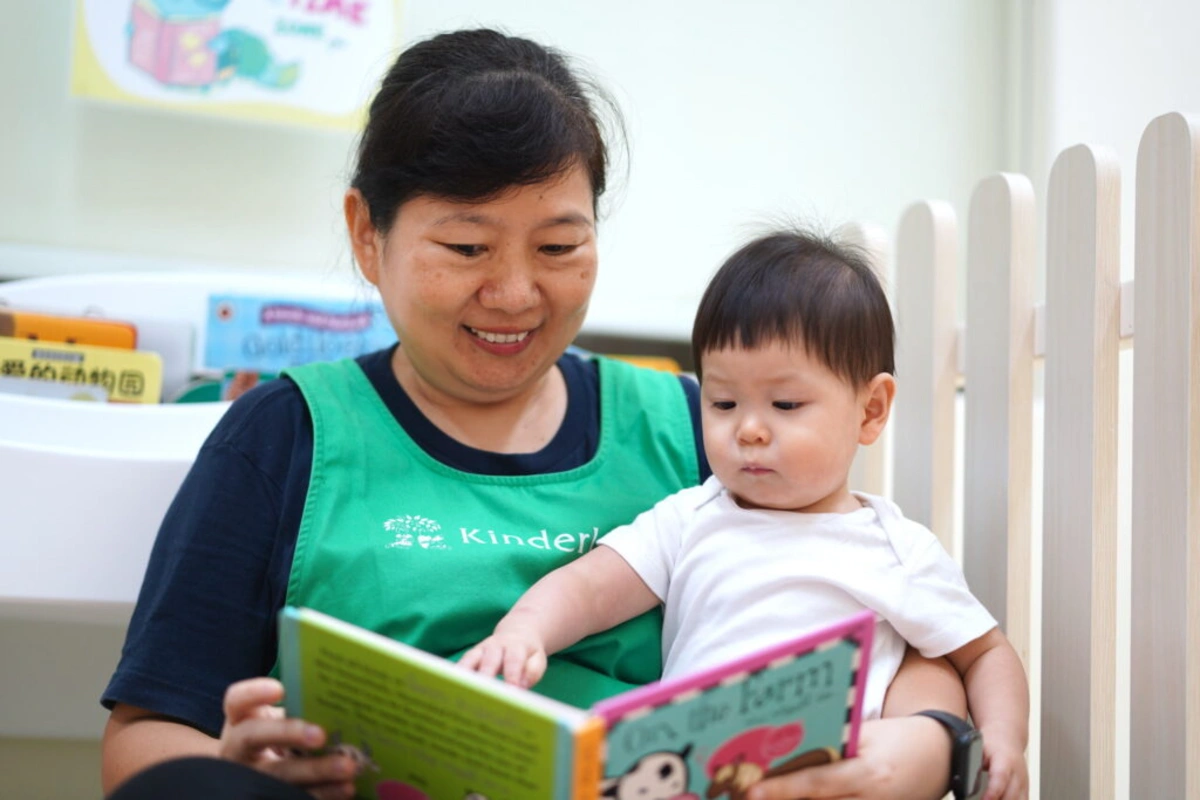
At Kinderland Preschools, we believe every child deserves to develop a love for language from a young age.
Playgroup (two and three years old)
Children are exposed to rich language experiences through conversations, shared reading, songs, and movement activities, supported by gestures and visual cues that help them understand and express meaning.
Nursery to Kindergarten One (four and five years old)
Children begin expanding their vocabulary and language comprehension while continuing to strengthen their listening and speaking skills through meaningful classroom interactions.
Kindergarten Two (six years old)
Children explore storytelling, sentence construction, shared reading, poetry adaptation, and early writing. Mini Project Learning conducted in Chinese also encourages collaboration, creativity, and communication as children engage in inquiry-based learning experiences.
Benefits That Last Beyond Preschool
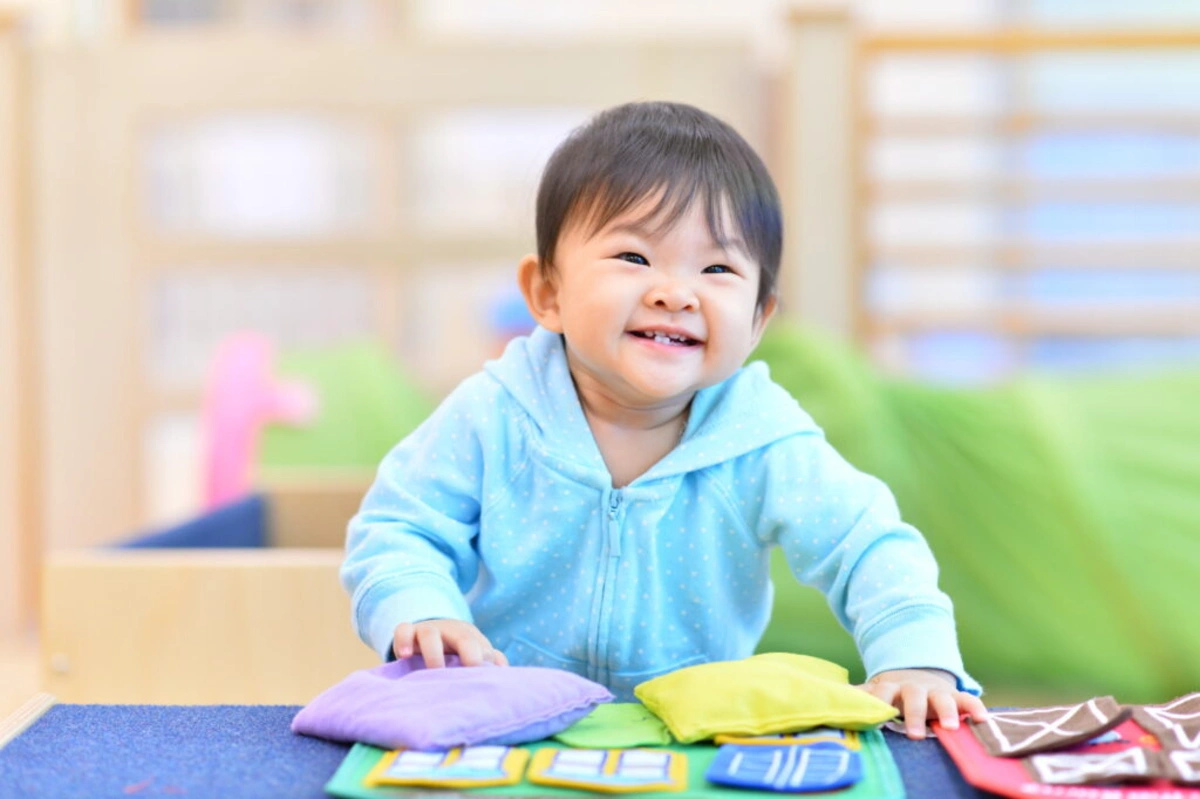
Give your little one a strong start with Kinderland’s bilingual learning experience.
Early bilingualism can support children in many lasting ways:
- Stronger literacy development
- Greater problem-solving ability
- More flexible thinking
- Better understanding of different cultures
- A stronger sense of cultural identity
Learning an alternative language early also helps children broaden their perspective on the different cultural heritage while preparing them to thrive in a multilingual world. At Kinderland Preschools, children experience language through play, music, and everyday conversations — building confidence and a lasting love for learning.
This article is contributed by:
Ms Wang Weiping
Kinderland Chinese Curriculum Specialist
References
Adesope, O. O., Lavin, T., Thompson, T., & Ungerleider, C. (2010).
A systematic review and meta-analysis of the cognitive correlates of bilingualism. Review of Educational Research, 80(2), 207–245.
Baker, C. (2011).
Foundations of Bilingual Education and Bilingualism. Multilingual Matters.
Best, J. R., Miller, P. H., & Naglieri, J. A. (2011).
Relations between executive function and academic achievement from ages 5 to 17. Learning and Individual Differences, 21, 327–336.
Besson, M., Chobert, J., & Marie, C. (2011).
Transfer of training between music and speech: Common processing and influence of musical expertise. Annals of the New York Academy of Sciences.
Bialystok, E., Craik, F. I. M., & Luk, G. (2012).
Bilingualism: Consequences for mind and brain. Trends in Cognitive Sciences, 16(4), 240–250.
Bialystok, E., & Majumder, S. (1998).
The relationship between bilingualism and cognitive processes in problem solving. Applied Psycholinguistics, 19, 69–85.
Children Journal. (2023).
The association between music and language in children: A state-of-the-art review.
Franco, F., Suttora, C., Spinelli, M., et al. (2021).
Singing to infants matters: Early singing interactions affect musical preferences and facilitate vocabulary building. Journal of Child Language.
Kuhl, P. K. (2011).
Early language learning and literacy: Neuroscience implications for education. Mind, Brain and Education, 5(3), 128–142.
李传江 (Li Chuanjiang). (2018).
学前儿童双语学习对执行功能的影响——基于 fNIRS 脑成像技术的研究 (博士论文). 华东师范大学.


 Kinderland Singapore